
Headless CMS explained without the hype
Some topics look purely technical until you bring them down to a real project decision. That is where they become interesting.
The simple idea
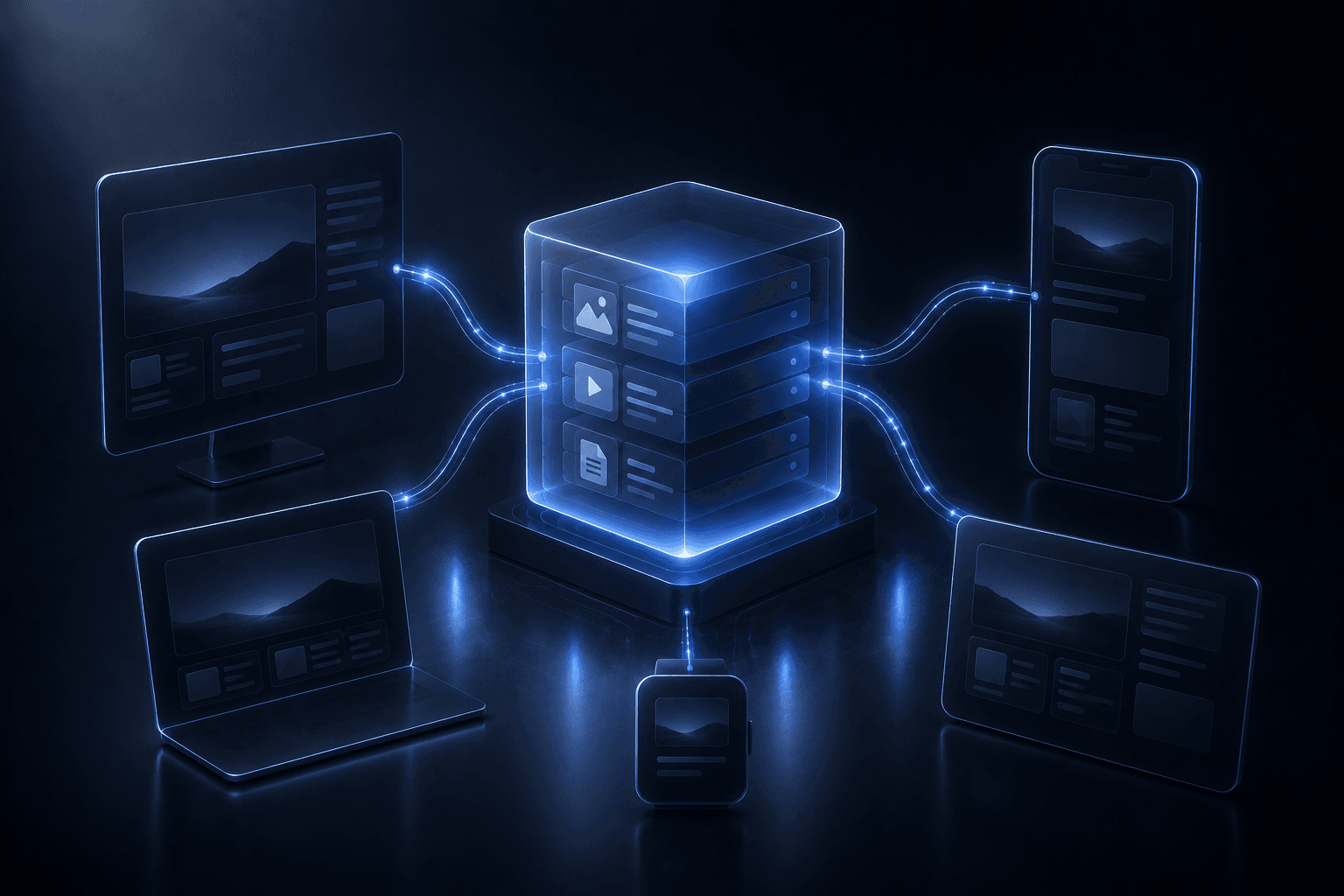
A headless CMS separates the place where content is edited from the place where it is displayed. The CMS stores and organizes. The front-end decides how to present.
That can be powerful, but it is not magic. If the project does not need that separation, it can become just another layer to maintain.
When it makes sense
It makes sense when there are multiple channels, complex content, high performance needs, or a visual experience you do not want to limit to a template.
Also when the client needs editorial autonomy but the front-end needs to feel premium, fast, and very controlled.
The part people forget
A headless CMS requires good content modeling. If you only replicate fields without thinking, you do not gain much. The value is turning content into clear, reusable, composable pieces.
Technology helps. Judgment decides.
Closing
In the end, most of it comes back to the same thing: build with intent, remove noise, and leave a base someone can use, understand, and maintain.