WordPress yes, but not always as the whole website
Some topics look purely technical until you bring them down to a real project decision. That is where they become interesting.
WordPress is not the enemy
I have worked a lot with WordPress, and I am not interested in selling the idea that it is dead. It is not. It is still a very comfortable tool for editing content, managing users, and shipping websites quickly.
The problem appears when it is used by inertia. When a simple website ends up with a heavy theme, ten plugins, and a slow experience only because it was familiar.
The right question
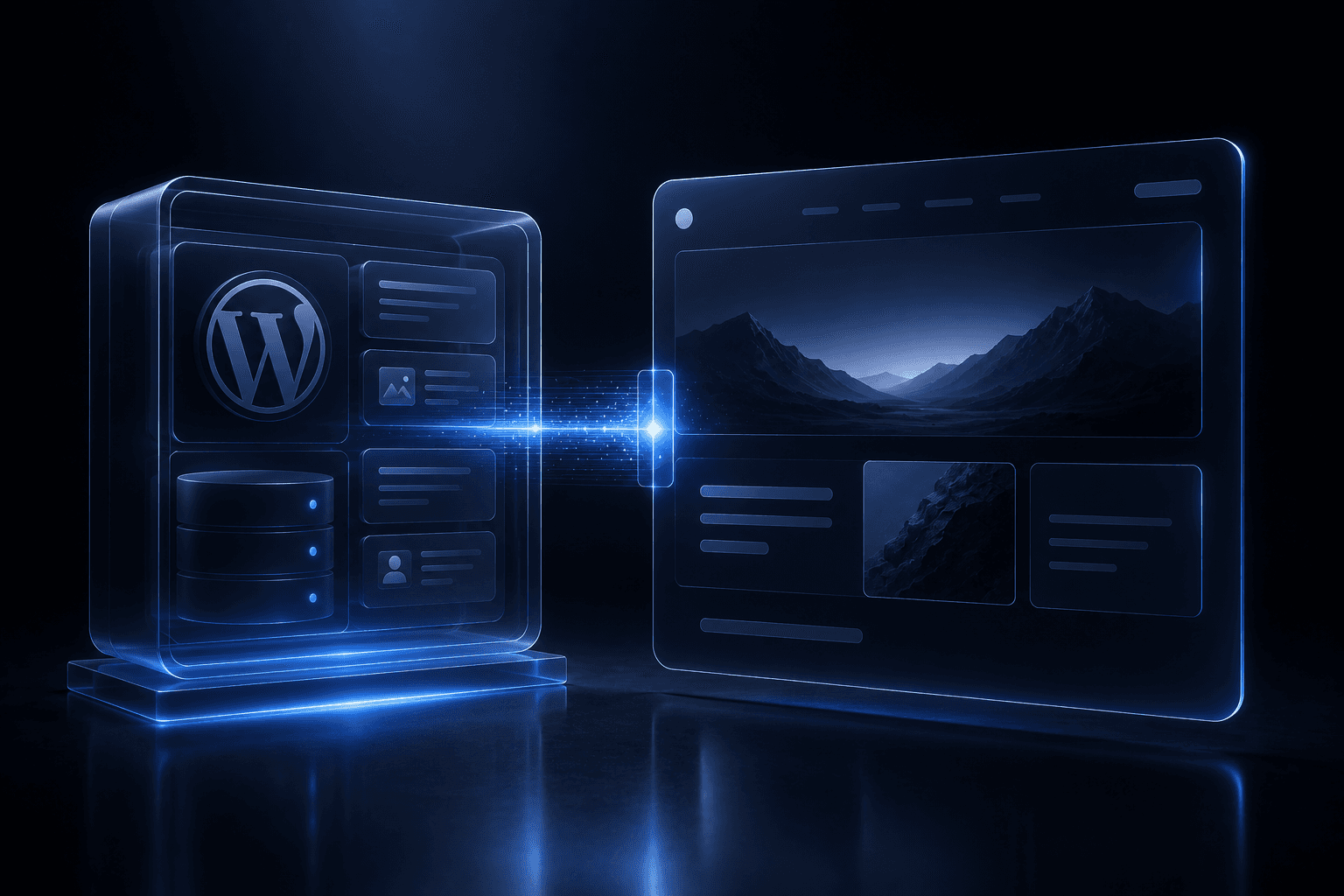
The question is not “WordPress yes or no”. The question is what role it should play. It can be the whole website, it can be only the CMS, or it may not be needed.
In some projects, full WordPress makes sense. In others, using it headless keeps familiar editing while allowing a faster, more controlled front-end.
Choosing with judgment
I like to think of WordPress as a tool, not an identity. If it gives the client autonomy and does not hurt the experience, great. If it adds weight without need, it is time to choose another base.
The stack should serve the project, not the other way around.
Closing
In the end, most of it comes back to the same thing: build with intent, remove noise, and leave a base someone can use, understand, and maintain.